PROCURECULTURE
Buyer Education
An independent buyer’s perspective
Buyer Education
Anatomy of anAssortmentLadder
How to see what your shelf is actually saying before a vendor tells you what it should say.
The Line Item
One promo on someone else’s menu. At the time, nothing like it on ours.
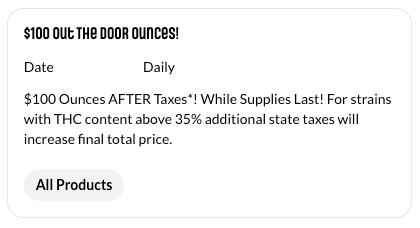
Posted as a daily promo, while supplies last. The fine print notes that strains above 35% THC carry additional state tax.
The rung we were missing.
I learned to look at assortments this way by accident. I was reviewing a competitor’s menu when I noticed they had $100 OTD ounces. We had nothing in that spot.
It wasn’t a bad product problem. It was a missing rung. I suspected we were missing a whole group of shoppers, though that’s my read of the situation, not something I measured. What I can say for certain is that the gap was visible on their menu in about ten seconds, and I had never seen it on ours in months.
That’s what an assortment ladder is for.
It wasn’t a bad product problem. It was a missing rung.
The Anatomy
Three questions, one ladder.
Most buyers build an assortment the way people build a playlist: one good pick at a time. A strong brand shows up, a rep is persuasive, a sample impresses, and the SKU goes in. Months later the category has forty items and no logic, and nobody can explain why the third eighth from the left is there.
A ladder lays the category out in rungs so you can see coverage and gaps at a glance. Three questions build it: where are the price points, which sizes are covered, and which formats are present.
Rung One
Price-point coverage
Start with the shopper’s wallet, not the brand’s story. Sort the category into price bands (value, mid, premium, top shelf) and count what sits in each. The goal is not an equal number everywhere. The goal is that every band you intend to serve has something worth buying in it, and that you can say why the thin bands are thin.
Maybe your customer base justifies a top-heavy shelf. Maybe you inherited it.
Rung Two
The ounce deserves its own look.
Size coverage
Size is where ladders quietly break. A shopper who loves a particular eighth may want the same product in a gram to try it, or in a larger size once they trust it. If your best seller exists in one size only, you’ve built a dead end instead of a ladder.
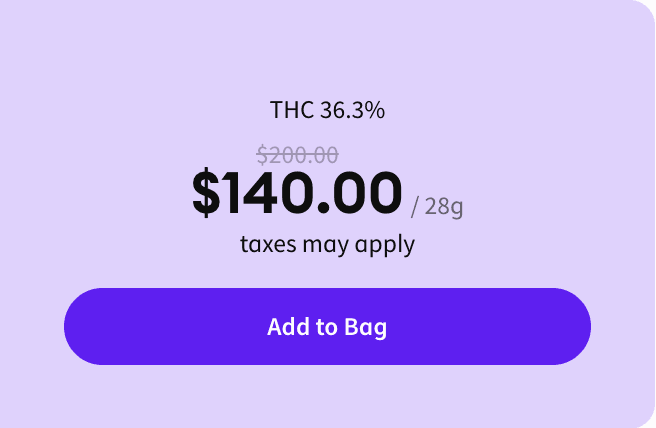
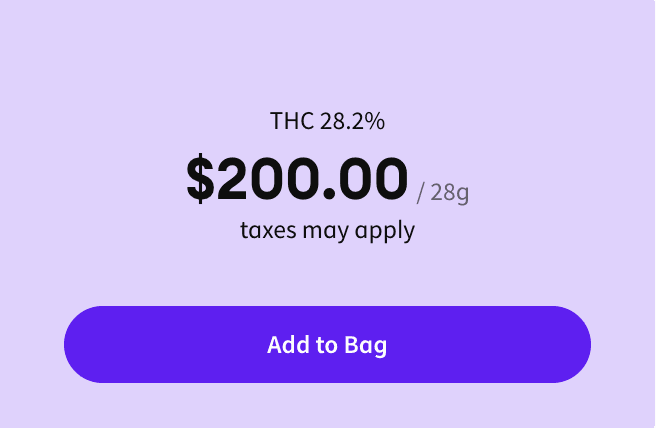
The ounce deserves its own look. It’s the far end of the size rung, and in my experience it often serves a different shopper than the eighth does: someone buying for value or volume, who is often comparing your price per gram against the menu down the street. When that rung is empty, those shoppers don’t complain. They just buy it somewhere else.
Rung Three
Format coverage
Flower, pre-roll, infused pre-roll, shake: formats serve different occasions, and a category can look deep while being one format wide. Ask whether a shopper who wants the same experience in a different format can find it on your shelf, or has to leave.
When two rungs go missing at once
Two gaps, one cell.
My ounce gap was really two gaps stacked together: a missing size and a missing price point, sitting in the same cell. That’s the kind of thing a ladder surfaces and a SKU list hides.
A list tells you what you carry. A ladder shows you where nothing is.
Read it like a buyer
Imagine a small flower category. The brands in the diagram are fictional (A through F) and the price bands are placeholders. Value is the most complete band, but it stops at 7g, so the shopper who wants the most flower for the least money has nowhere to go. The entire ounce column is empty, which is exactly the kind of hole my competitor’s menu exposed. The other three bands are marked up below the diagram.
Fig. 1
The ladder, illustrated
A small flower category. Fictional brands. Placeholder price bands.
| 1g | 3.5g | 7g | 14g | 28g | Pre-roll | |
|---|---|---|---|---|---|---|
| Value | A | A | A | no SKU | no SKU | A |
| Mid | no SKU | B · C | B | no SKU | no SKU | C |
| Premium | D | D · E | no SKU | no SKU | no SKU | D |
| Top shelf | no SKU | F | no SKU | no SKU | no SKU | no SKU |
| No ounce |
- MidTwo competing eighths and almost nothing else. Ask whether B and C are splitting the same sales.
- PremiumAn entry size and a pre-roll, but no step up in size.
- Top shelfExactly one SKU, so you can’t tell yet whether the band is working or just present.
None of this tells you what to buy. It tells you which questions are worth asking.
Illustrative only. Not a real menu.
The Negotiation
What I did about it.
I took that menu to a competing vendor and used it as a negotiating point. We came back with a cost that let us price an ounce competitively and still hold a healthy margin. Then the shop went on to sell a lot of ounces.
I’m not going to pretend one conversation explains every sale. But I know what we were missing. My read is that a real group of shoppers was walking out the door because we had nothing in that spot, and that the gap had likely been there for months before I saw it.
The lesson is that a ladder isn’t only a diagnostic. A gap you can see is a gap you can negotiate with. “We have nothing in this spot, and here’s what the shopper down the street is paying” is a far stronger conversation with a vendor than “we’d like a better price.”
A gap you can see is a gap you can negotiate with.
The Limits
What the ladder does not tell you.
It shows coverage, not performance. A full rung with a slow seller is worse than an empty rung, because it ties up money. Before you fill a gap, pair the ladder with sell-through and days on hand, and check whether the gap exists because shoppers don’t want the product or because nobody offered it. An empty rung is a question, not an instruction.
The sentences are the point. A ladder isn’t a rule about what to stock. It’s a habit of knowing why each SKU is there, and noticing quickly when something that should be there isn’t.
A five-minute version to try
- Pull your current category list.
- Sort it by price band.
- For each band, mark which sizes and formats exist.
- Open one competitor’s menu and mark theirs the same way.
- Circle every empty cell on your side that’s filled on theirs, and every cell where you have two near-identical SKUs.
- For each circle, write one sentence: intentional, or inherited?
Free download
The one-page Assortment Ladder template
Your shelf, their menu, and a place to circle the gaps.
By John Hirsch
Next in Buy SheetRead it nowDays on Hand, Explained for People Who Hate MathThe other number to read next to every ladder.